

The State Universities Retirement System (SURS) can be complex at times. What does it mean to be Tier 1 versus Tier 2? How does that affect one’s benefits? Does it matter for a participant who is in the Retirement Savings Program (RSP)?
Know that Tier 1 vs Tier 2 benefits are not elective—there is no choice—it is based on the date in which you were first employed by an employer participating in the SURS system. Traditional, Portable, and RSP plans are a choice, and exist in both the Tier 1 and Tier 2 systems.
Here’s a brief primer on the difference:
history
Tier 1 is the “original” SURS. Within this system, there were still the choices of the Traditional, Portable and Self-Managed Plan (now called the RSP). Because of budgetary concerns, the Illinois legislature passed Public Act 96-889, which instituted the Tier 2 benefits for participants starting employment on or after January 1, 2011.
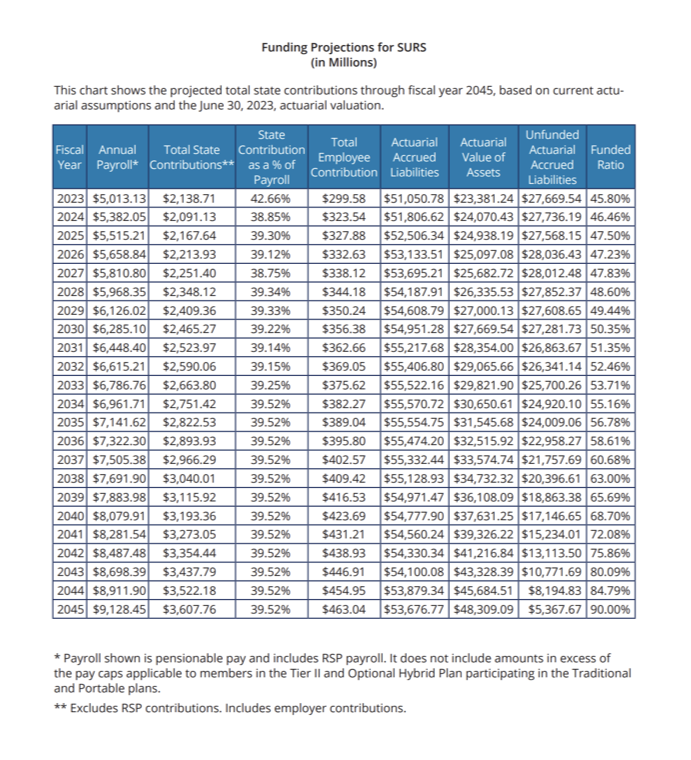
SURS funding solvency is always a hot topic when we meet with SURS retirees or soon to be retirees and could be a topic of a separate article. However, SURS funding is projected to improve over the next 20 years as Tier 2 participants begin to outnumber Tier 1 participants and retirees. We can see in the chart below (from the SURS website) that the funded ratio is only expected to increase onward from 2026. This is good news for participants, though the taxpayers of Illinois will need to bridge the gap in the intervening years.
Retirement Savings Plan
The retirement benefits under the RSP are the same for either Tier 1 or Tier 2 participants. In other words, the vesting requirements and retirement benefit options and savings rates are the same for participants no matter their hire date.
The vesting period is still 5 years; the required employee and employer savings are the same rates and retirement age requirements are the same. An RSP participant will need 5 years of service at age 62, 8 years of service at age 55, or can retire at any age after 30 years of service. The benefit options are complex and entirely dependent on an individual’s complete financial situation. See Bluestem’s blog post for more detail on that.
Traditional and Portable plan Differences
For these plans, there are significant differences between Tier 1 and Tier 2 participants.
The most significant differences are:
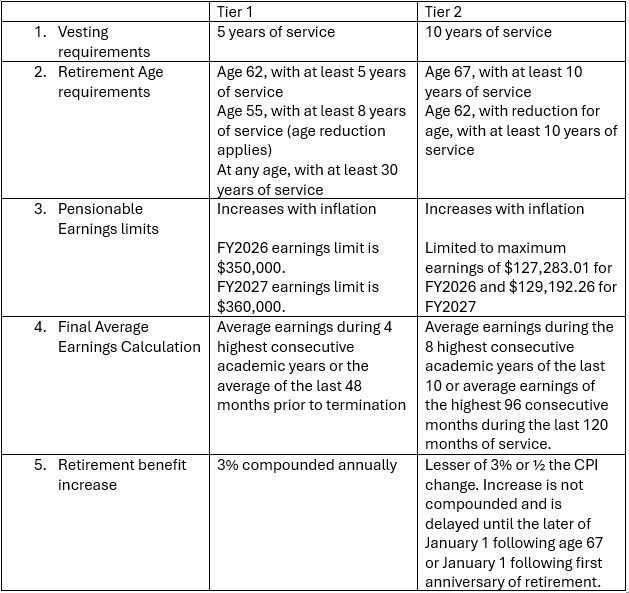
As you can see, Tier 2 is inferior in each of these major differences. This represents a savings in benefits SURS and the State are paying out, but also a major reduction in benefits and income for individuals who joined SURS eligibility after Jan 1, 2011.
A person with Tier 2 benefits must draw their benefits at a later age, after more years of service, will likely be paid a smaller amount, and receive smaller annual increases.
how bluestem can help
Bluestem can assist in assessing choices around retirement readiness (under any of the above plans), help determine how your SURS benefits fit into your financial picture, and can provide education on the terminology and options of the SURS system.
Additional information
SURS website: https://surs.org/
State Universities Annuitants Association (“SUAA”) website: https://www.suaa.org/home. SUAA is an advocacy group which provides a unified message dedicated to preserving and protecting a strong public pension system, healthcare benefits, higher education, and the general well-being of its membership.
SUAA advocates on behalf of all faculty and staff of public universities and community colleges—both retired and current employees—their spouses and survivors, who are participants and beneficiaries of the State Universities Retirement System.
Important Disclaimer
This content has not been reviewed by or endorsed by State Universities Retirement Systems - SURS. Bluestem Financial Advisors, LLC, is an independent advisory firm not affiliated with SURS.